Iron Rails Strategy: How to Win | Playgridia
In Iron Rails knowing the rules is not enough: two players holding the same cards will finish 30 points apart. The tactics below come straight out of the scoring maths and from how the bots really behave.
1. Count points per car, not per route
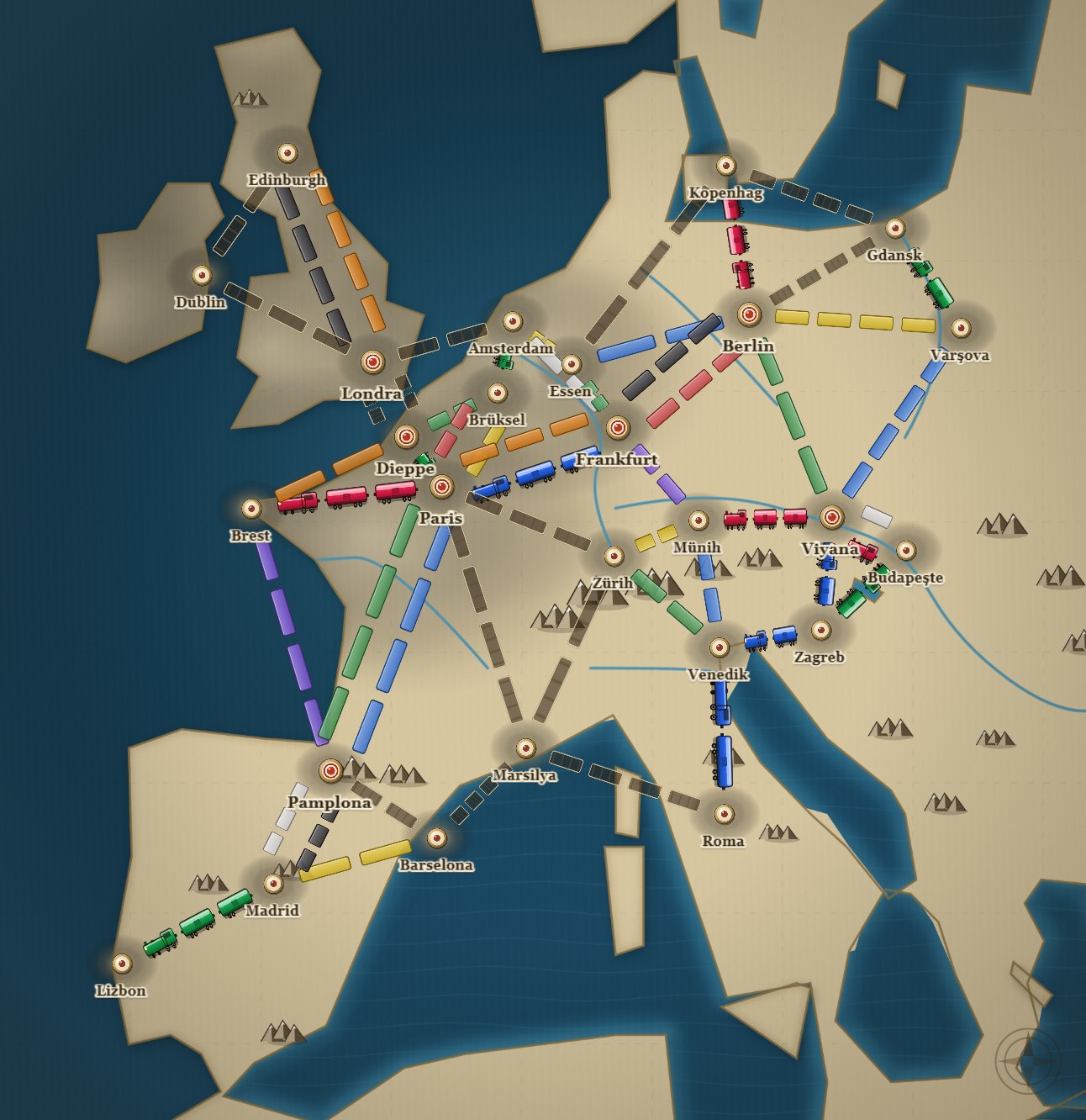
The scoring curve is steep, not flat: a 3-car route pays 4 (1.33 per car) while a 6-car route pays 15 (2.5 per car). Spend six cars on two 3-routes and you get 8; spend them on one 6-route and you get 15. Your train supply is the real budget — longer is always more efficient. Take short routes only to close a ticket or to join your chain.
2. A ticket is a two-sided bet
A completed ticket scores +its value, a failed one −its value — so missing a 10-point ticket is a 20-point swing. That makes the mid-game "draw tickets" action anything but free: you draw 3 and must keep 1. Only take it when your network is already there — if your existing line already touches the likely city pairs, most draws are free points. With few trains left or a fragmented line, drawing tickets is self-harm.
3. Build one chain, not scattered spurs
The +10 for the longest continuous path costs nothing extra — the same cars, just laid end to end. Instead of spreading routes across the map, extend a single spine: you chase the bonus and your tickets naturally resolve inside one network. The same logic feeds Globetrotter (+10 for most tickets completed): one spine means many cheap tickets hanging off it.
4. Never enter a tunnel without a spare card
Committing to a tunnel flips 3 cards off the deck, and every flip matching what you paid with demands one more card. Measured, about 55% of tunnel attempts produce at least one match. With no spare in hand, stay out: backing off costs no cards but it costs the turn — and turns are the scarcest resource in this game. Ferries are the mirror image: they force a minimum number of Locomotives. On the Asia board Locomotives are effectively the currency, and heading south without banking wilds first is how you stall.
5. Grey routes are the dump for your surplus colour
Grey routes accept any colour as long as it is a single colour. Those four yellows nobody wants are exactly what a grey stretch is for — it converts dead cards into points and frees your hand. By contrast, taking the face-up Locomotive costs your whole turn: only worth it when that wild pays for a specific ferry or covers a tunnel surprise.
6. Choose when the game ends
When a player's supply falls to 2 trains or fewer at the end of their turn, everyone takes exactly one final turn. If you are ahead, use that as a weapon: claim long routes early, burn your trains fast, and your rivals' half-built tickets turn into minus points. If you are behind, do the opposite — rescue the tickets that would score negative before you fish for more, because the end can arrive sooner than you planned.
Remember too that every station you never build is +4: a station is a rescue, not a routine investment. For the full rules see the how-to-play guide, and to pick the right board read the map guide. Then play Iron Rails free.
Any third-party brand and game names mentioned are trademarks of their respective owners. Playgridia is an independent platform, not affiliated with or endorsed by them.