How to Solve Chess Puzzles: A 5-Step Routine for Beginners
 Play Chess
To solve chess puzzles, do not hunt for a clever idea: run the same short routine every time. Read the task, list the forcing moves (checks, captures, threats), count who defends what, then test the opponent's best reply before you touch a piece. Puzzles are built so that exactly one move works, and a routine finds it faster than inspiration.
The five-step routine
- Read the task. Who moves, and is it "mate in 2" or "win material"? That decides what counts as success.
- List the forcing moves. Every check, every capture, every move that threatens something big. Say them out loud or write them down.
- Count defenders. For each enemy piece ask: is it defended, and by what? A piece nobody defends is loose.
- Find the opponent's best reply. A move that works only if the opponent cooperates is not the solution.
- Play it only when the line holds. If you cannot see the end of the line, go back to step 2.
Forcing moves come first
A forcing move leaves the opponent very few answers, which makes it easy to calculate. That is why puzzle solutions are so often a check, a capture or a threat. Quiet moves are possible, but you only look at them once the forcing ones are exhausted.
| Look for | Why it comes first | What it can turn into |
|---|---|---|
| Checks | The opponent must answer the king, so there are only a few replies to calculate. | Mate in N, or a check that also attacks a second piece. |
| Captures | They change the material at once; ask what the recapture costs. | Wins material, Loose piece, Sacrifice. |
| Threats | A move that attacks two things at once often cannot be answered by saving both. | Fork (see the tactics guide linked below). |
Count the defenders
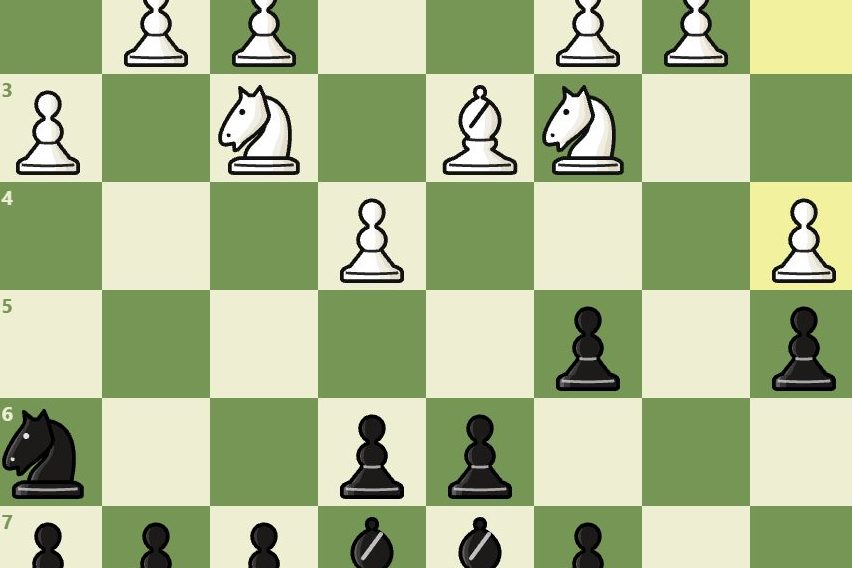
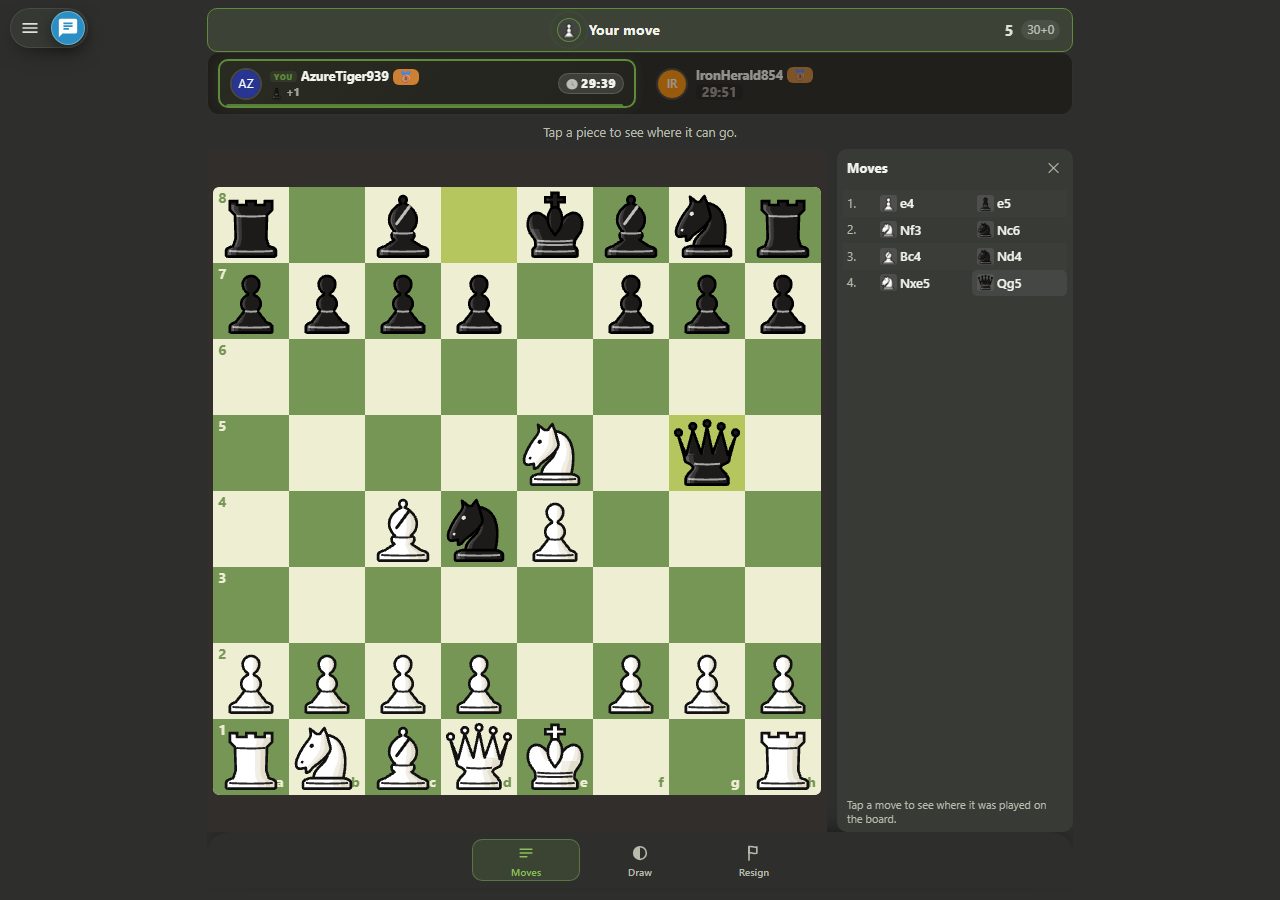
Before you attack a piece, count: how many of your pieces attack it, how many of theirs defend it. A piece with no defenders is loose and can simply be taken or attacked for free. In our daily puzzle pool, Loose piece is the most common theme of all. When a piece looks defended, check whether the defender is itself pinned, overloaded or about to be traded off.
Test the best reply
Before you play your candidate, make the opponent's strongest answer for them. If the answer wrecks your idea, the idea was wrong; if it only delays it, you may have found the solution. This is why puzzles have one answer: the generator behind the daily puzzles rejects any position where a second move is nearly as good (the second-best move has to be at least 25 winning-chance points worse). A puzzle that feels like it has several solutions usually has one, and the others lose to a reply you did not look at.
Mate puzzles and win-material puzzles
On a mate puzzle you keep the king in mind: which squares can it reach, and which of your checks take them away. On a win-material puzzle you are looking for a loose piece, a fork or a trade that leaves you ahead. In our daily pool, about a third of the puzzles are mates and the rest win material. On the last step of a mate puzzle in the daily, any move that gives checkmate is accepted, so you do not have to guess the author's exact move. For a picture of a king with no safe square, see the fool's mate guide.
Using a hint without wasting it
In the daily puzzle the Hint shows which piece to move and costs 1 star, once per step. Do your routine first. Ask for the hint only when you have listed the forcing moves and still cannot tell which piece matters; then the hint cuts the search to one piece, and you still have to find where it goes. Remember the 3 lives: a wrong move costs one, an illegal move costs nothing, and the clock only breaks ties. The full scoring is in the daily chess puzzle guide.
A practice plan
- Solve today's daily puzzle with the routine, and write down the theme it shows at the end.
- Play a game, press "Review the game" on the end screen and go to your mistakes; a single position goes on the free analysis board.
- Use "Try again" on each mistake. The drill accepts any move within 2.5 points of the best one, and after the second miss it shows the answer.
- Read one tactics page, such as fork, pin and skewer, then do tomorrow's daily.
What to do with it
Pick one habit and keep it: before every move in the puzzle, name the checks, the captures and the threats. For longer-term improvement beyond puzzles, see how to get better at chess.
Frequently Asked Questions
How do I start solving chess puzzles as a beginner?
Run the same routine each time: read the task, list every check, capture and threat, count the defenders of each enemy piece, and test the opponent's best reply. Start with easy puzzles, where the solution is usually one move.
Why does a chess puzzle have only one solution?
Our puzzle generator keeps a position only if the best move is clearly better than the second-best, by at least 25 winning-chance points. A position where a second move is nearly as good is rejected.
What is a loose piece?
A loose piece is a piece that no other piece defends. It can often be captured for free or attacked with a fork, so counting defenders is one of the first things to do.
Should I use the hint in the daily puzzle?
Use it only after you have listed the forcing moves and still cannot tell which piece matters. It shows the piece to move, not the destination, and costs 1 star once per step.
How can I practise on my own mistakes?
Open the game review on a finished game and press Try again on a mistake. Any move within 2.5 points of the best move counts, and the answer is shown after your second miss.