Play Backgammon Against the Computer Free: 8 Bot Levels
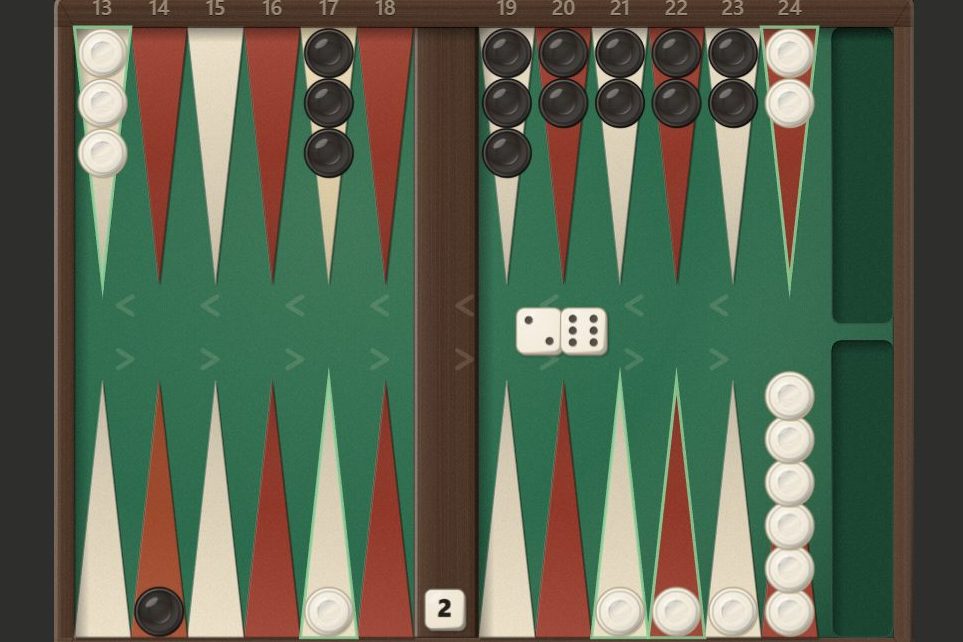 Play Backgammon
You can play backgammon against the computer for free by pressing the Play button at the top of this post: it seats you against a bot and starts a match, with no account needed. The bot is not one opponent but a ladder of eight named players, from Toby (about 400) to Zeno (about 1800), so you can pick a level that fits you instead of fighting a single fixed strength.
Start a match in one tap
The Play button opens a public room, seats a bot in the empty chair and starts the game. A guest session is created for you if you are not signed in. If you already have a match running, the button takes you back to it instead of opening a second one. You can also go to the Backgammon page and use quick play or create a room yourself.
Colour is random unless the room says otherwise, and the opening throw works like the real thing: each side throws one die, you throw first, the higher die starts and plays both numbers. A tie is thrown again.
The eight bot levels
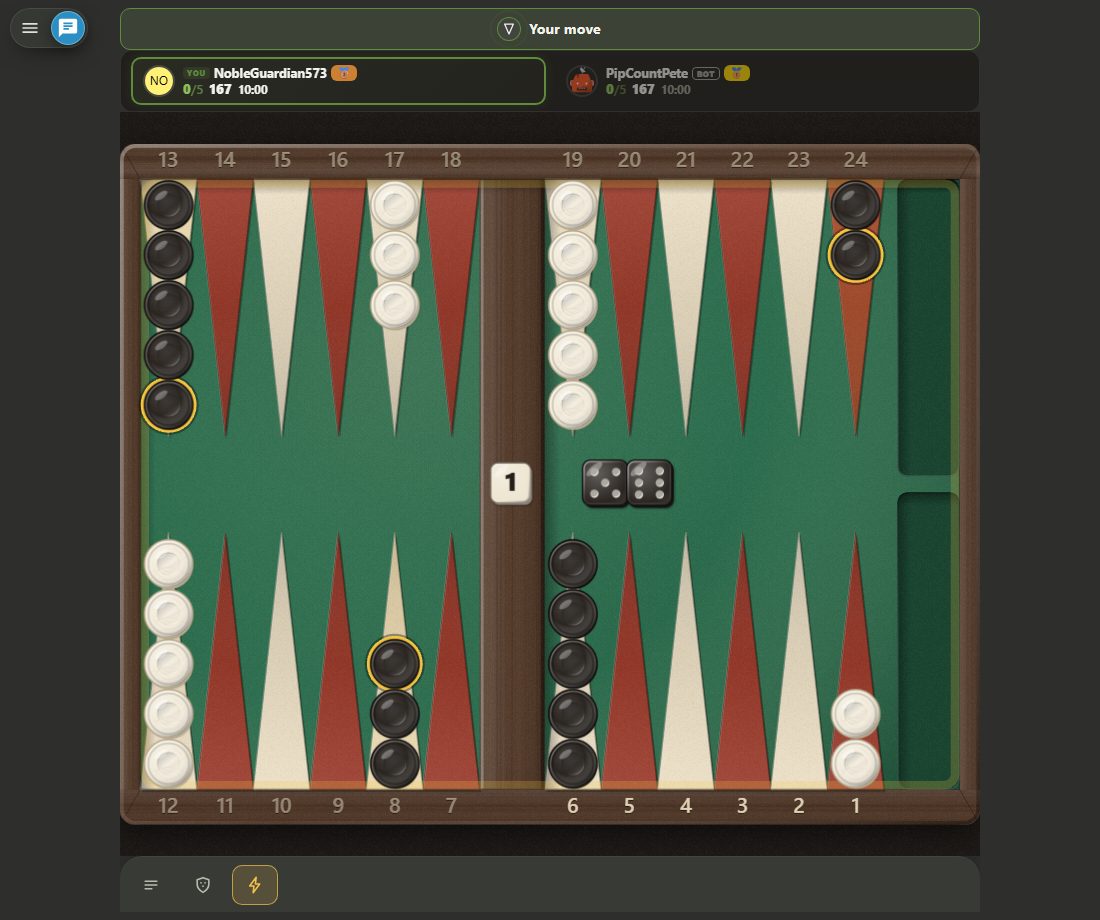
Each rung has a persona name and an estimated rating. The ratings are estimates, not guarantees. What really changes from rung to rung is how the bot picks a play.
| Rung | Name | Est. rating | How it thinks |
|---|---|---|---|
| 1 | Toby | 400 | Hand-written feature model, heavy noise (0.12). Timid with the cube. |
| 2 | Nell | 600 | Feature model, noise 0.05. Timid with the cube. |
| 3 | Rafa | 800 | Feature model with no noise at all. Timid with the cube. |
| 4 | Iris | 1000 | Switches to the neural network, with heavy noise (0.115). Timid with the cube. |
| 5 | Selim | 1200 | Network, noise 0.075. Normal cube style. Can resign. |
| 6 | Dora | 1400 | Network, noise 0.05. Can resign. |
| 7 | Marco | 1600 | Network, noise 0.02. Can resign. |
| 8 | Zeno | 1800 | Network, no noise, and the only rung that searches one ply ahead, weighing all 21 of your possible replies. Can resign. |
Three ideas explain the table. The feature model is a hand-written evaluator; the engine notes say it loses about 80% of its games to the network. Noise is a random wobble added to the estimate for each candidate play, so a noisy bot misjudges close plays instead of making random moves. And only Zeno looks one ply ahead. The four lowest rungs never resign.
Which level will you meet first?
A new player who presses quick play is seated against Nell (rung 2). The same rung is kept for your next match. Win two in a row and the next quick match moves you up a rung; lose two in a row and it moves you down one. If you create a room yourself, the room shows the full eight-rung picker, so you can choose any level directly. Beaten rungs are remembered, so you can see which ones you have already won against.
Are the dice fair against a bot?
Yes, and the bot gets no special treatment. Before the first roll the server picks a secret seed and publishes its hash. Every roll is then computed from that seed and a roll counter, and when the game ends the seed is revealed so anyone can recompute every roll and check it. A bot can only ask to roll; it cannot choose a value. The full explanation is in are online backgammon dice fair, and the odds themselves are in backgammon dice probabilities.
Match length, clock, cube and variants
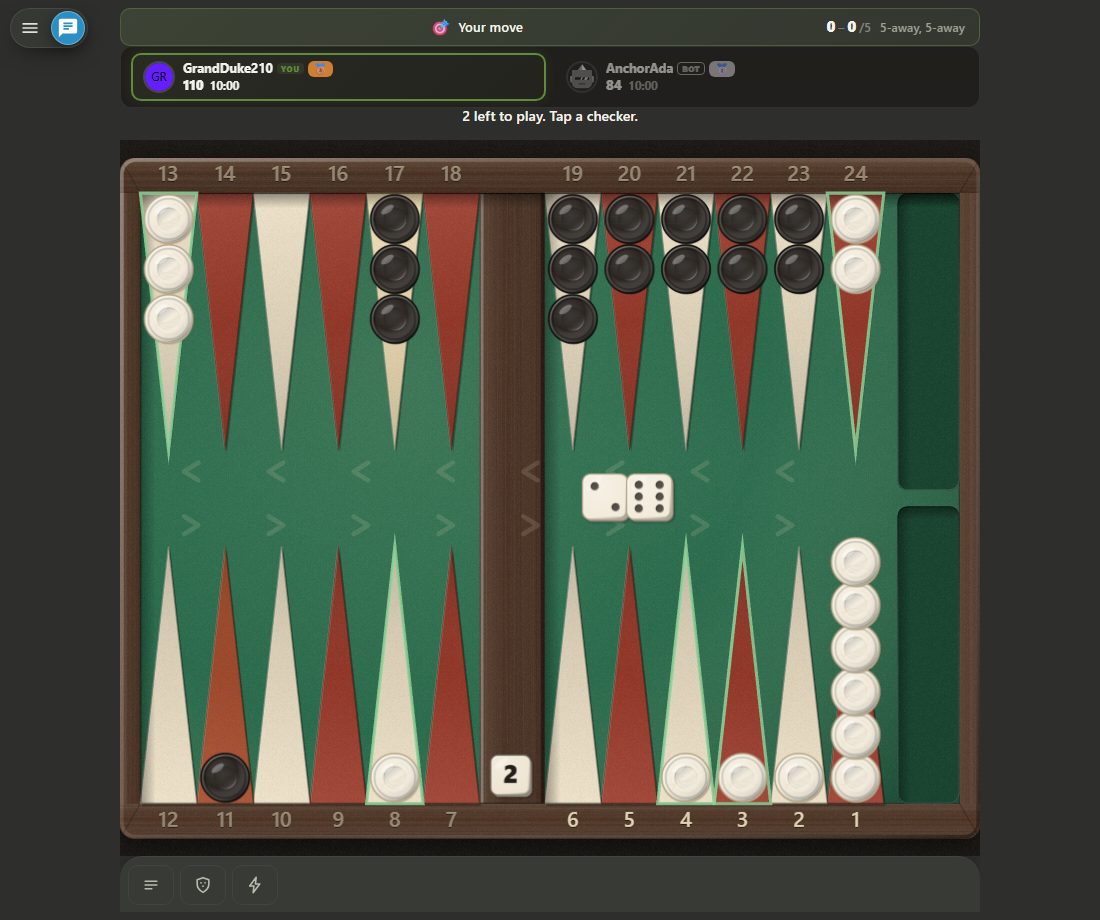
- Match length: the default is a 5-point match. The room can change it to 1, 3, 7 or 11 points. A game is worth 1 point, a gammon 2 and a backgammon 3.
- Clock: the default gives you 12 seconds free per turn plus a 120-second reserve for every match point, so a 5-point match gives each side 10 minutes of reserve. If you run out of the reserve you lose the whole match, not just the game. Other time controls exist in the room options.
- Doubling cube: it is off by default. If the room switches it on, the bot offers doubles and takes or drops yours. There is no cube in a 1-point match.
- Variants: standard, nackgammon and hypergammon can all be played against bots. See backgammon variants for what each one changes.
Does a bot match count?
A match with one human against bots is never rated, so it cannot move a rating up or down. It still adds to your total match counters, your daily streak and daily quests. Your ladder progress, meaning the rungs you have beaten, is recorded as well.
What to practise against which rung
- Toby and Nell: learn the rules and the flow of a game. Their noisy play leaves chances to hit and to escape. Our how to play backgammon guide covers the basics.
- Rafa: no noise, but still the feature model. A good place to practise consistent, sensible play.
- Iris to Dora: the network plays, with decreasing noise. Practise the openings from backgammon opening moves and the match-score decisions, with the cube switched on.
- Marco and Zeno: almost no mistakes. Use them as a test: if you can score against Zeno, your game is solid.
What to do with this
Press Play, let Nell show you where you stand, then climb one rung at a time. Turn the cube on once you are comfortable at a rung, and switch the match length to 3 or 1 when you only have a few minutes.
Bot ratings are estimates from the game engine, not official rating-list figures.
Frequently Asked Questions
Can I play backgammon against the computer for free?
Yes. The Play button at the top of this post starts a match against a bot, and you do not need an account because a guest session is created for you. The match is a 5-point match by default.
Which bot level should a beginner pick?
Quick play seats a new player against Nell, rung 2 of 8, at about 600. Win two in a row and you move up a rung; lose two in a row and you move down one. In a room you can pick any of the eight levels yourself.
Does the computer cheat with the dice?
No. The server commits to a hidden seed before the first roll and reveals it when the game ends, so every roll can be recomputed. A bot only asks to roll and cannot choose a value.
Is the doubling cube used against the bot?
It is off by default. If the room switches it on, the bot offers doubles and takes or drops yours. There is no cube in a 1-point match.
Does a game against the computer count for my rating?
No. A match with one human against bots is never rated. It does count toward your total match counters, daily streak and quests, and the rungs you beat are recorded.
What happens if I run out of time against the bot?
Each turn gives you 12 seconds free, then your reserve of 120 seconds per match point is used. If the reserve runs out you lose the whole match, not just the game.