Chess Time Controls: Bullet, Blitz, Rapid Explained
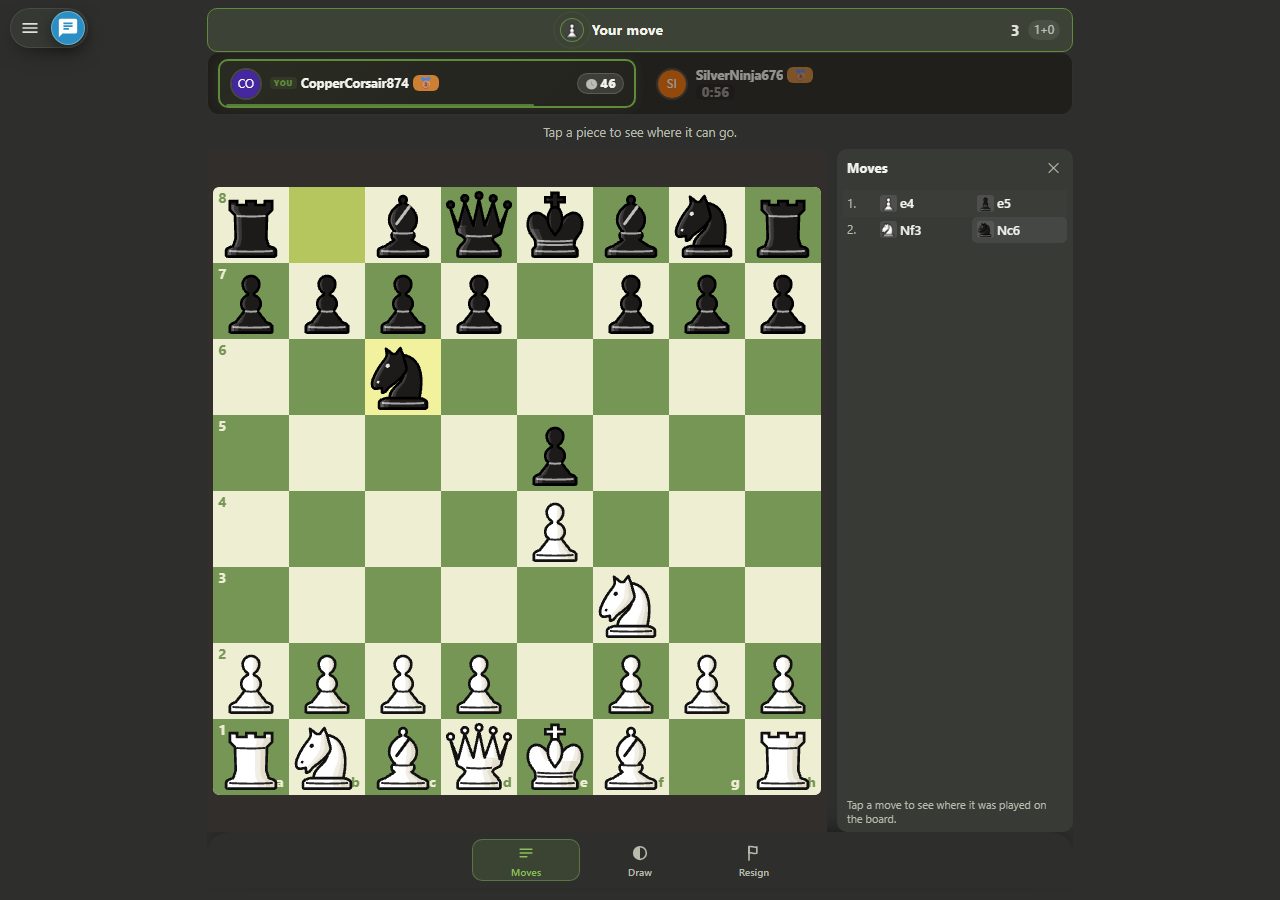
Chess time control is the tempo setting that gives each side a "base time" for the entire game and an "increment" (added per move) — a label like "3+2" means 3 minutes base plus 2 seconds per move. On this platform's chess board, this is a special two-sided chess clock, not the general per-move timer used elsewhere: chess deliberately disables the platform's per-move timer and runs its own clock — this is why you see two separate clocks on screen at the same time, an unusual and deliberate choice on this site.
What is time control
A chess game is played with a fixed time pool shared by both players; this pool is not a per-move budget, it is ONE bank valid for the entire game. This is why the platform's general per-move timer (used in other games) is completely disabled for chess; chess runs its own two-sided clock, which pays the increment when a move is completed and stops when that player's turn ends. Both clocks are visible above the board at the same time — among games on this site, only chess does this. The tempo is a room option chosen by the host when creating the room and is the same for both players; if nothing is chosen, 10+0 is applied by default. Because the pool is a single bank, you can distribute the time however you like between moves: you can spend a long time on a difficult position and play an easy move in seconds, what matters is the total staying below your base time.
Seven time controls
The site offers seven preset time controls; all are base time plus per-move increment pairs, fixed values not calculated. The room panel gives you exactly these seven choices; you cannot write your own base/increment combination:
| Label | Base Time | Increment | Category |
|---|---|---|---|
| 1+0 | 1 minute | none | bullet |
| 2+1 | 2 minutes | 1 second | bullet |
| 3+2 | 3 minutes | 2 seconds | blitz |
| 5+0 | 5 minutes | none | blitz |
| 10+0 | 10 minutes | none | rapid (default) |
| 15+10 | 15 minutes | 10 seconds | rapid |
| 30+0 | 30 minutes | none | classical (longest) |
The default tempo is 10+0, and this choice is deliberate: a new player starting with three minutes will drop the flag without really seeing the board. The longest tempo on the list is 30+0, and there is no unlimited option — and never will be, because the design intentionally avoids "a game that never ends."
How increment (Fischer increment) works
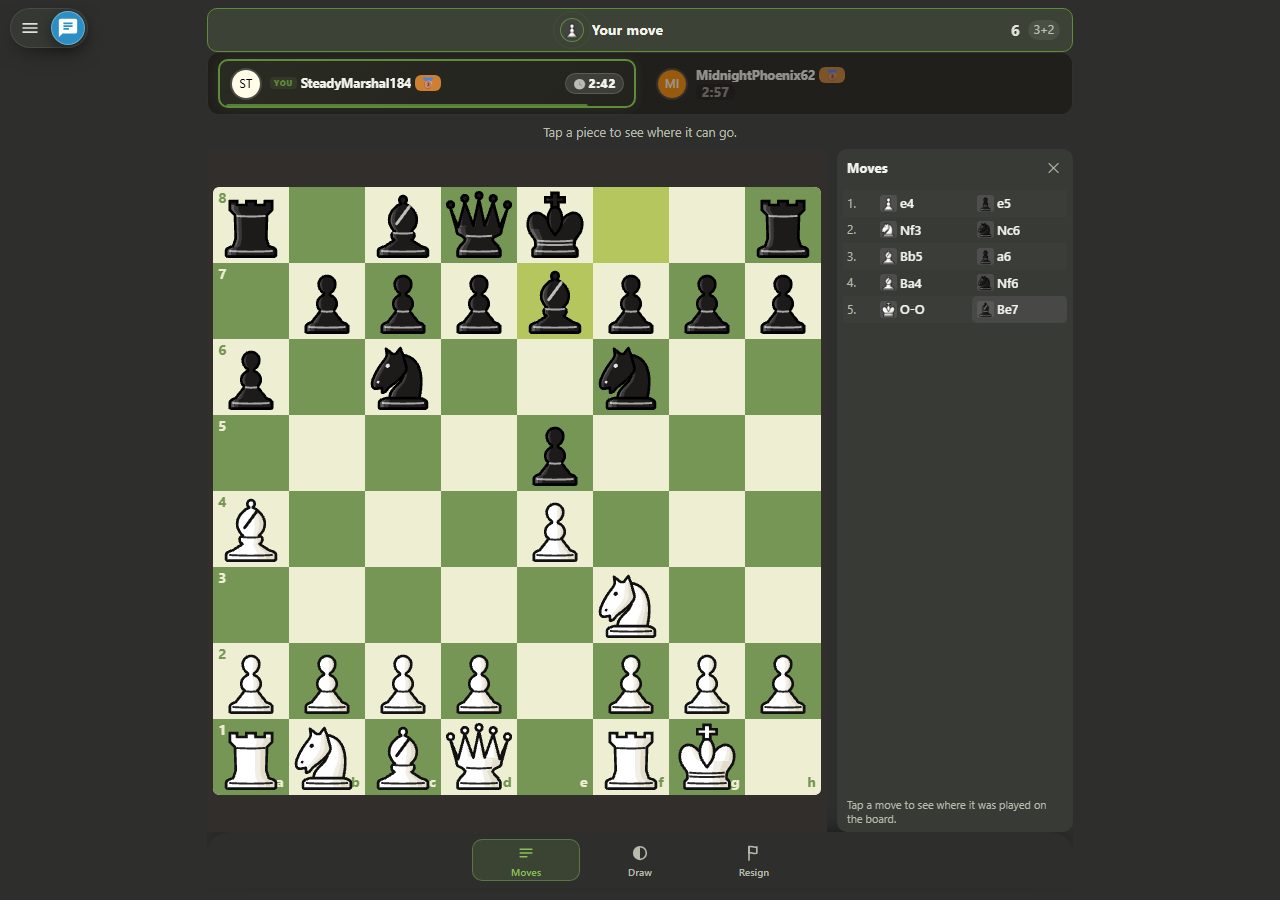
Increment is added AFTER a move is completed — it is not put into the bank before the first move, and it is not paid on the move that ends the game (a move that delivers checkmate does not earn increment for the losing side). This makes 3+2 a completely different game from 3+0: in 3+2, a player who plays fast and accurately can finish a phase with MORE time than they started it, because each correct move adds a small boost to the clock. For example, over 40 moves of playing without thinking, a player gains only 80 seconds total from increment — in 3+0 there is no such recovery, time only shrinks and time pressure compounds as move count grows.
Where does 30+0 fit on the FIDE scale
By FIDE's official classification, blitz covers tempos BELOW 10 minutes per person; rapid spans 10 to 60 minutes; classical tournament tempo is typically 90 minutes per person plus 30 seconds per move. If you apply this scale to the site's own table, the honest result is this: the site's longest tempo, 30+0, still falls into the FIDE rapid category — there is no choice here equivalent to FIDE's classical tournament tempo. The "classical" label is used as a category name on this site; it does not mean conforming to FIDE's official classical definition, so playing with that expectation sets you up correctly. If you are preparing for an official FIDE-rated tournament elsewhere, think of the 30+0 here as a warm-up tempo — not practice for classical tempo.
What happens when the flag falls
The clock is scanned by a single control every 500 milliseconds; so even if no one is looking at the board, a fallen flag is caught at the next scan and resolved BEFORE a move can be played — a player cannot move after their time runs out. There is one exception where a fallen flag does not always mean a loss (FIDE rule 6.9): if the opponent already cannot checkmate with the pieces on the board (for example, if they have only a lone Knight or Bishop left), the player whose flag fell does not lose — the result is a draw. This exception is applied automatically on the server side, no referee needed. The fact that the scan runs per-process with a single control means in practice: even if you leave the tab in the background or your phone screen locks, the clock keeps running on the server side independently; your screen does not need to be open.
If your connection drops, the clock does not stop
In chess, a dropped connection is not an instant "opponent wins" judgment — it is a recoverable bot takeover: if your connection fails, your seat is temporarily filled by a bot, and when you return, you can reclaim your seat from the bot. But the clock does not stop during this time; it keeps running just like a clock on a physical board — staying connected is your responsibility, and the tempo does not forgive this. Do not confuse this with deliberately LEAVING the room entirely: that is always an outright loss, only an unexpected connection drop is recoverable.
Which time control should you choose
If you are new to the game, the default 10+0 is a good starting point — it leaves you time to look at the board and plan. If you enjoy blitz but hate dropping the flag, try 3+2 instead of 3+0; a few seconds of increment will keep you out of time trouble as long as you play well. Bullet (1+0, 2+1) should be thought of as a different game entirely — what matters here is not deep calculation but recognizing patterns in seconds; 15+10 or 30+0 are tempos where you can make real plans and the error margin is higher.
In short: which time control you pick is a decision about how much time you want to spend thinking, not a ranking of skill or strength. Before starting a new game, open the chess board, choose a tempo from the room options; if you want to play the first few moves following the basic rules guide you can do that, for the full rules on draws see the draw guide, and for moves that save time in the opening, check the opening traps article.
Frequently Asked Questions
What does time control mean in chess?
Time control is the tempo setting that gives each side a base time to spend over the entire game and an increment added after each move. It is not a per-move budget but a single bank for the whole game; on this platform it is a special two-sided chess clock that replaces the general per-move timer, and both clocks are visible on the board at the same time.
What is the default chess tempo on the site?
The default tempo is 10+0, which is 10 minutes base time with no increment. This is a deliberate choice: a new player starting with three minutes will drop the flag without getting a real look at the board, so the site defaults to 10 minutes rather than a short bullet tempo.
What does 3+2 mean in chess, and is it considered blitz?
3+2 means 3 minutes of base time plus 2 seconds of increment added after each move, and it falls into the blitz category on the site's table. The increment makes the time pressure much less severe than 3+0, because a player who plays well regains a few seconds with each move.
What happens in chess if the flag falls?
The clock is checked on the server every 500 milliseconds, so a fallen flag is caught at the next check and resolved BEFORE a move can be played, even if no one is watching. The flag always means a loss unless the opponent cannot checkmate with the pieces remaining (for example, only a lone Knight or Bishop) — this is FIDE rule 6.9 and is applied automatically.
If my connection drops during a chess game, does the clock stop?
No, the clock keeps running just like a physical board's clock. If your connection fails, your seat is temporarily filled by a bot, and when you return you can reclaim your seat from the bot; this is different from deliberately leaving the room, which is always an outright loss.
Is the site's longest tempo, 30+0, considered classical by FIDE standards?
No. By FIDE's official scale, blitz is below 10 minutes, rapid is 10 to 60 minutes, and classical tournament tempo is typically 90 minutes per person plus 30 seconds per move. The site's longest tempo, 30+0, still falls into the FIDE rapid category by these standards; there is no choice here equivalent to FIDE's classical tournament tempo.