Bots vs Real Opponents: When to Play Which
Whether you should pick bots vs real opponents for your next match depends on what you need right now: a bot starts instantly and never punishes a bad experiment, which makes it the right training partner while you're learning a board's rules, while a real opponent is the only source of genuine bluffing, surprise, and a rating that actually moves. Both are free, and switching between them is just picking a different room.
When a bot is the better opponent
Pick a bot when the goal is learning, not winning. A bot is always seated, so there's no lobby to wait in, and a bad match costs nothing beyond the time it took — a game where you're the only real player at the table never touches your rating, so you can misplay a whole opening and lose nothing but the round.
- Start instantly: adding a bot to an open seat is immediate, no matchmaking wait.
- Three difficulty rungs: choose Easy, Medium or Hard when you add the bot, and raise the challenge as you improve.
- No rating risk: a match with fewer than two real players simply isn't scored either way.
- Still counts for your streak: daily streak and quest progress are recorded for every human player regardless of who else is at the table, bots included.
When a real opponent is the better one
A bot repeats patterns; a person doesn't. A human opponent bluffs, changes plan mid-match, and reads your moves back at you — pressure no bot recreates. It's also the only path to a moving rating: a match is rated as long as it starts with at least two real players, however many bots fill the remaining seats, so a four-seat Warfront game with two friends and two bots is rated exactly like a full human table.
- Rating that moves: two or more real players at the start is the only threshold that matters — bots elsewhere on the table don't affect it.
- Real unpredictability: no fixed skill ceiling and no pattern that repeats the same way twice.
- A held seat, not a ruined match, if someone drops: a disconnected player's seat is covered by a bot after a short grace window, and they can reclaim it on return — one bad connection doesn't end the game for everyone else.
How bots actually work on Playgridia
Four mechanics decide how much a bot changes the match you're in:
- Difficulty: adding a bot to an open seat lets you pick Easy, Medium or Hard — Medium is the default, and a harder bot plays a stronger game, not a faster one.
- Rating: a match is rated the moment it starts with at least two real players; a bot sitting in a third or fourth seat has no effect on that either way, and fewer than two real players means the match is never scored.
- Disconnects: if a real opponent drops mid-match, their seat is held for a grace window of about two minutes; once it expires a bot takes over and keeps playing their position, and if they reconnect they can reclaim the seat and continue from wherever the bot left it.
- Streak and quests: daily streak and quest progress are recorded for every human player in a finished match whether or not a bot is at the table — a solo bot match still moves those counters even though it never moves your rating.
| Bot | Real opponent | |
|---|---|---|
| Availability | Instant, always seated | Depends who's online |
| Difficulty | Pick Easy, Medium or Hard | Whatever they bring |
| Counts toward rating | Never (fewer than 2 real players) | Yes, once 2+ real players start the match |
| Counts toward streak & quests | Yes, same as any match | Yes, same as any match |
| If they disconnect | — | Seat held ~2 min, then a bot fills in; reclaimable on return |
| Best for | Learning rules, testing a build | Thrill, rating, bragging rights |
A practice routine: learn with a bot, then play people
The two aren't rivals, they're stages. Add a Medium bot the first time you open a new board and play a full match before worrying about strategy — losing costs nothing since your rating isn't moving either way, and every human participant still banks the day's streak and quest progress. Once the rules are automatic, raise the bot to Hard to pressure-test one specific tactic, then open a room to real players, or invite friends, for the version that actually counts: the moment two of you are seated, the match is rated regardless of how many bot seats fill the rest of the table.
In practice: Minesweeper, Warfront and Estates
Minesweeper
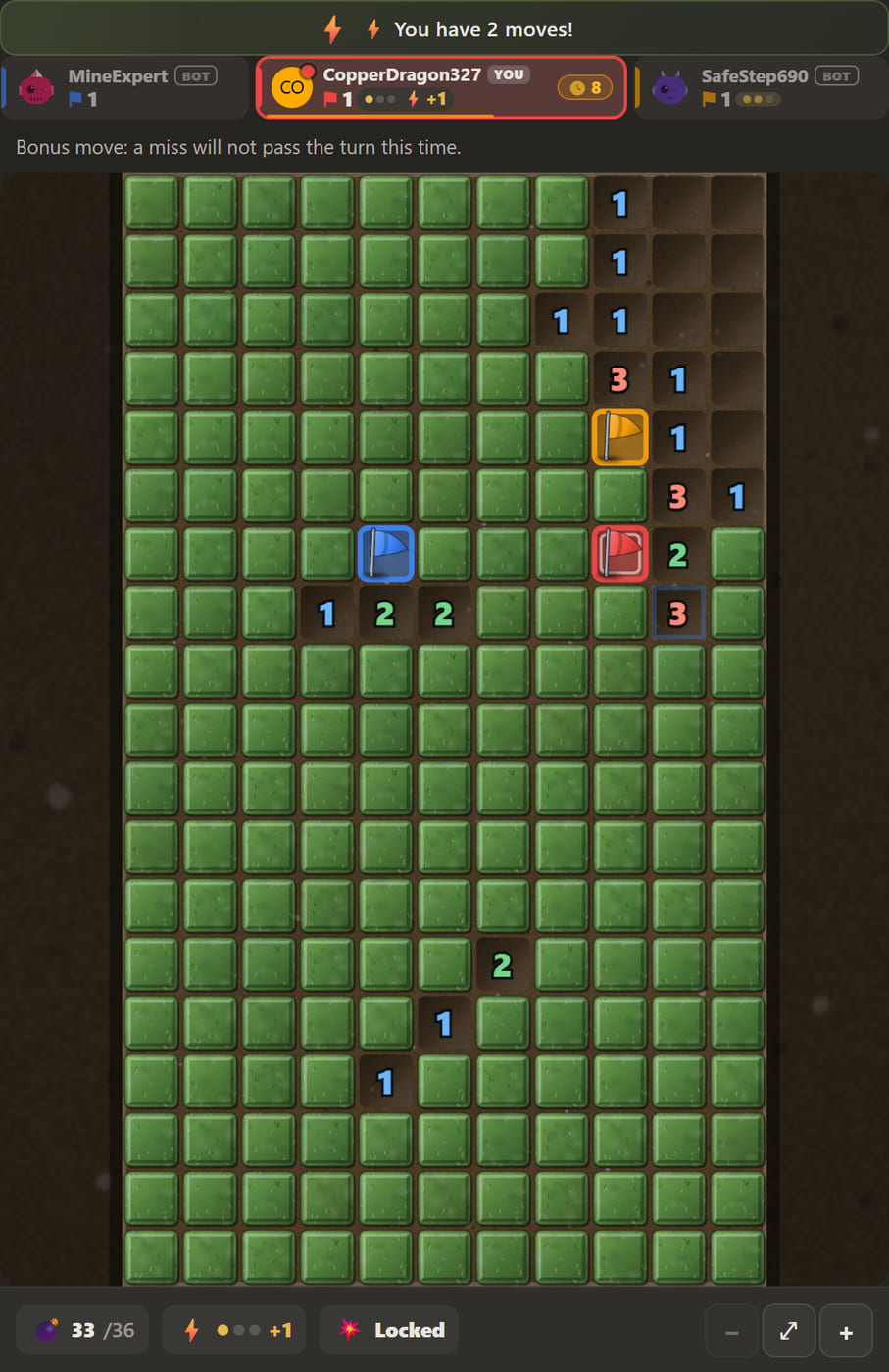
Minesweeper seats exactly two players, bot or human, so there's no lobby size to manage — add a bot and you're straight into the shared minefield. Learn the turn logic here: tap a covered cell, a mine plants your flag and keeps your turn, clear ground passes it on, and falling five points behind unlocks a one-shot 3x3 blast to catch back up. A bot won't bluff about which cell to try next, so once you're reading the numbers correctly, a real opponent is where the tension actually lives — you're both racing the same board, and every flag you take is one they can't. The full rules guide covers the five fields in detail.
Warfront
Warfront is deep enough that a bot is worth using just to learn the counter web — swordsman beats spearman, spearman answers cavalry and gryphons, archers and musketeers shred anything that flies — before facing an opponent who reads your composition and adapts to it. Set a Hard bot to rehearse a specific counter or an opening build, then bring the same plan to a real opponent: a human won't overextend the same way twice, which is exactly what makes the counter web worth having memorized. The strategy guide walks through the unit chain and the age system.
Estates
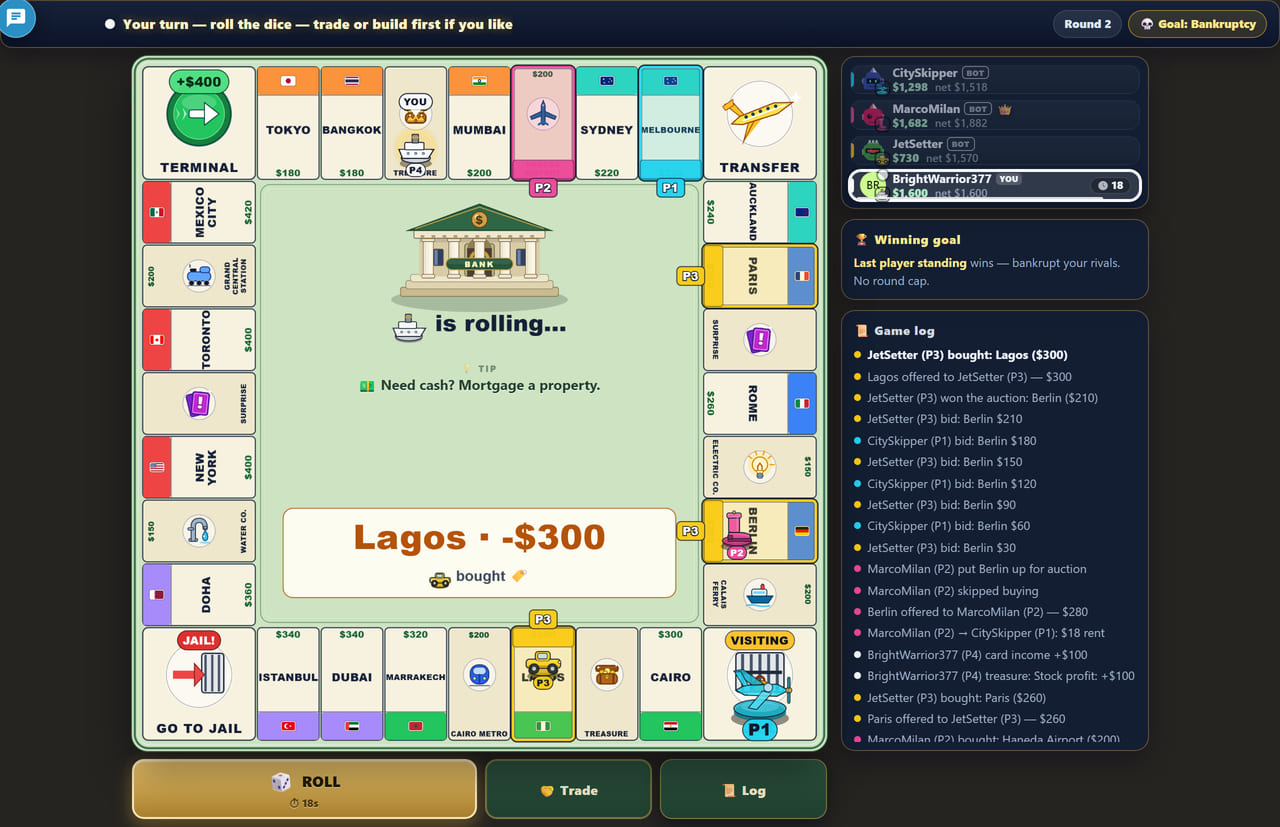
Estates is the clearest case for switching. A bot table teaches the phase machine cleanly — roll, land, buy or auction, continue — but auctions and trades are where real people actually diverge from a script: a live opponent bluffs a bid up, holds a trade offer to squeeze a rival mid-debt, or leans on whoever's closest to completing a monopoly. Learn the rules with bots filling the other seats (the screenshot below is exactly that: three bots and one human mid-auction), then bring real players to the table for the version where the auctions actually sting. The auction guide covers bidding tactics in more depth.
So which do you pick tonight?
Open a new board against a bot first, at whatever difficulty keeps it interesting, and don't worry about your rating while you do — it isn't moving either way, and your streak and quest progress bank exactly the same as any other match. Once the rules are automatic, take the same board to a room with real players; the moment two of you are seated the match counts, and that's the version worth showing up for.
Any third-party brand or game names mentioned are trademarks of their respective owners. Playgridia is an independent platform and is not affiliated with or endorsed by them.
Frequently Asked Questions
Does playing bots hurt my rating?
No. Rating only ever moves for a match that starts with at least two real players, however many bots fill the other seats. A match where you're the only real player simply isn't scored either way, so there's no penalty for experimenting against a bot.
What bot difficulty should I pick?
When you add a bot to an open seat you can choose Easy, Medium or Hard; Medium is the default. Start on Easy or Medium while you are still learning a board, and move up to Hard once you want a real test of a specific tactic.
Do bot matches count toward my daily streak and quests?
Yes. Daily streak and quest progress is recorded for every human player in a finished match whether or not a bot is at the table, so a solo bot match still banks that progress even though it never moves your rating.
What happens if my opponent disconnects mid-match?
Their seat is held for a grace window of about two minutes. If they don't reconnect in time, a bot takes over and plays the rest of the match for them; if they come back afterward, they can reclaim the seat and keep playing from wherever the bot left it.
Can I switch a bot seat to a real player mid-match?
Not inside the same match — a bot that has taken a seat stays until the match ends or the original player reclaims it after a disconnect. What you can do is start a new room with real players any time; the moment two of you are seated, that match is rated.